Length frequency data were analyzed from a sample of 1,485 individuals of the five most commercially important species (Table 3) among them
Bairdiella ronchus (Sciaenidae), Cathorops mapale (Ariidae), Mugil incilis, (Mugilidae), Trichiurus lepturus (Lepturidae) and Cetengraulis edentulus (Engraulidae).
2.6 3.0 Scombridae Thunnus thynnus 4.5 5.9 Sciaenidae
Bairdiella chrysoura 1.6 -- Sciaenidae Cynoscion spp.
undecimalis; y Scianidae con tres especies:
Bairdiella chrysoura, B.
In summer spot, Leisotomus xanthurus (Lacepede, 1802) were abundant in all habitats, but silver perch
Bairdiella chrysoura (Lacepede, 1802) were more abundant over uncultivated habitats than either the clam or harvested sites (ANOVA: F = 115, P< 0.001).
Description in text appears to be in part of Leiostomus xanthurus Lacepede and in part of
Bairdiella chrysoura (Lacepede); the illustration is of B.
###(Pomatomus###(Morone###(Paralichthys###(Micropogon###(
BairdiellaAlimentacao de
Bairdiella ronchus (Cuvier) (Perciformes, Sciaenidae) na baia de Guaratuba, Parana, Brasil.
The orangemouth corvina (Cynoscion xanthulus),
bairdiella (
Bairdiella icistia), and sargo (Anisotremus davidsonii) were established in the Salton Sea in the 1950s and, although piscivorous, these species were not considered a threat to desert pupfish because their habitats rarely overlapped (Walker et al., 1961).
Although no additional studies have been recently published, earlier works indicated that serranids (e.g., Epinephelus analogus, Paralabrax nebulifer, Mycteroperca spp.) were the primary teleost targets, with malacanthids (e.g., Caulolatilus princeps), gerreids (e.g., Eucinostomus argenteus, Diapterus peruvianus), haemulids (e.g., Haemulon scudderi, Pomadasys spp.), sciaenids (e.g., Cynoscion parvipinnis,
Bairdiella icistia), mugilids (e.g., Mugil cephalus, M.
rhomboidalis y en
Bairdiella ronchus, capturados en la misma localidad del presente estudio.
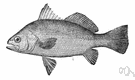 Bairdiella - drumfish