sci·ae·nid
(sī-ē′nĭd)n.
Any of various fishes belonging to the family Sciaenidae, which includes the drums and croakers.
[New Latin Sciaena, type genus (from Latin sciaena, a kind of sciaenid fish, from Greek skiaina, perhaps from skiā, shadow) + -id.]
sci·ae′nid adj.
American Heritage® Dictionary of the English Language, Fifth Edition. Copyright © 2016 by Houghton Mifflin Harcourt Publishing Company. Published by Houghton Mifflin Harcourt Publishing Company. All rights reserved.
sciaenid
(saɪˈiːnɪd) orsciaenoid
adj
(Animals) of, relating to, or belonging to the Sciaenidae, a family of mainly tropical and subtropical marine percoid fishes that includes the drums, grunts, and croakers
n
(Animals) any sciaenid fish
[C19: from Latin sciaena a type of fish, from Greek skiaina]
Collins English Dictionary – Complete and Unabridged, 12th Edition 2014 © HarperCollins Publishers 1991, 1994, 1998, 2000, 2003, 2006, 2007, 2009, 2011, 2014
ThesaurusAntonymsRelated WordsSynonymsLegend:
| Noun | 1. | 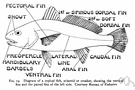 sciaenid - widely distributed family of carnivorous percoid fishes having a large air bladder used to produce sound sciaenid - widely distributed family of carnivorous percoid fishes having a large air bladder used to produce soundfamily Sciaenidae, Sciaenidae - warm-water marine fishes including the drums and grunts and croakers and sea trout drumfish, drum - small to medium-sized bottom-dwelling food and game fishes of shallow coastal and fresh waters that make a drumming noise jewfish, mulloway, Sciaena antarctica - large important food fish of Australia; almost indistinguishable from the maigre croaker - any of several fishes that make a croaking noise whiting - any of several food fishes of North American coastal waters sea trout - any of several sciaenid fishes of North American coastal waters |
Based on WordNet 3.0, Farlex clipart collection. © 2003-2012 Princeton University, Farlex Inc.