Yid·dish
(yĭd′ĭsh)n.
The language historically of Ashkenazic Jews of Central and Eastern Europe, resulting from a fusion of elements derived principally from medieval German dialects and secondarily from Hebrew and Aramaic, various Slavic languages, and Old French and Old Italian.
[Yiddish yidish, Jewish, Yiddish, from Middle High German jüdisch, Jewish, from jude, jüde, Jew, from Old High German judo, from Latin Iūdaeus; see Jew.]
Yid′dish adj.
American Heritage® Dictionary of the English Language, Fifth Edition. Copyright © 2016 by Houghton Mifflin Harcourt Publishing Company. Published by Houghton Mifflin Harcourt Publishing Company. All rights reserved.
Yiddish
(ˈjɪdɪʃ)n
(Languages) a language spoken as a vernacular by Jews in Europe and elsewhere by Jewish emigrants, usually written in the Hebrew alphabet. Historically, it is a dialect of High German with an admixture of words of Hebrew, Romance, and Slavonic origin, developed in central and E Europe during the Middle Ages
adj
(Languages) in or relating to this language
[C19: from German jüdisch, from Jude Jew]
Collins English Dictionary – Complete and Unabridged, 12th Edition 2014 © HarperCollins Publishers 1991, 1994, 1998, 2000, 2003, 2006, 2007, 2009, 2011, 2014
Yid•dish
(ˈyɪd ɪʃ)n.
1. a language of central and E European Jews and their descendants elsewhere: based on Rhenish dialects of Middle High German with an admixture of vocabulary from Hebrew and Aramaic, the Slavic languages, and other sources, and written in the Hebrew alphabet.
adj. 2. of or pertaining to Yiddish.
[1885–90]
Random House Kernerman Webster's College Dictionary, © 2010 K Dictionaries Ltd. Copyright 2005, 1997, 1991 by Random House, Inc. All rights reserved.
ThesaurusAntonymsRelated WordsSynonymsLegend:
| Noun | 1. | 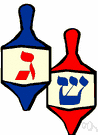 Yiddish - a dialect of High German including some Hebrew and other words; spoken in Europe as a vernacular by many Jews; written in the Hebrew script Yiddish - a dialect of High German including some Hebrew and other words; spoken in Europe as a vernacular by many Jews; written in the Hebrew scriptschtick, schtik, shtick, shtik - (Yiddish) a devious trick; a bit of cheating; "how did you ever fall for a shtik like that?" pisha paysha - (Yiddish) a card game for two players one of whom is usually a child; the deck is place face down with one card face upward; players draw from the deck alternately hoping to build up or down from the open card; the player with the fewest cards when the deck is exhausted is the winner schtick, schtik, shtick, shtik - (Yiddish) a contrived and often used bit of business that a performer uses to steal attention; "play it straight with no shtik" tsuris - (Yiddish) aggravating trouble; "the frustrating tsuris he subjected himself to" schmegegge, shmegegge - (Yiddish) baloney; hot air; nonsense German language, High German, German - the standard German language; developed historically from West Germanic shmooze - (Yiddish) a warm heart-to-heart talk kvetch - (Yiddish) a nagging complaint megillah - (Yiddish) a long boring tediously detailed account; "he insisted on giving us the whole megillah" tsoris - (Yiddish) trouble and suffering nosh - (Yiddish) a snack or light meal knish - (Yiddish) a baked or fried turnover filled with potato or meat or cheese; often eaten as a snack mishpachah, mishpocha - (Yiddish) the entire family network of relatives by blood or marriage (and sometimes close friends); "she invited the whole mishpocha" schmear, schmeer, shmear - (Yiddish) a batch of things that go together; "he bought the whole schmeer" chachka, tchotchke, tchotchkeleh, tsatske, tshatshke - (Yiddish) an attractive, unconventional woman chutzpanik - (Yiddish) a person characterized by chutzpa ganef, ganof, gonif, goniff - (Yiddish) a thief or dishonest person or scoundrel (often used as a general term of abuse) kibitzer - (Yiddish) a meddler who offers unwanted advice to others klutz - (Yiddish) a clumsy dolt knocker - (Yiddish) a big shot who knows it and acts that way; a boastful immoderate person kvetch - (Yiddish) a constant complainer meshuggeneh, meshuggener - (Yiddish) a crazy fool putz - (Yiddish) a fool; an idiot schlimazel, shlimazel - (Yiddish) a very unlucky or inept person who fails at everything schnook, shnook - (Yiddish) a gullible simpleton more to be pitied than despised; "don't be such an apologetic shnook" yenta - (Yiddish) a woman who talks too much; a gossip unable to keep a secret; a woman who spreads rumors and scandal yenta - (Yiddish) a vulgar shrew; a shallow coarse termagant schtick, schtik, shtick, shtik - (Yiddish) a little; a piece; "give him a shtik cake"; "he's a shtik crazy"; "he played a shtik Beethoven" schemozzle, shemozzle - (Yiddish) a confused situation or affair; a mess |
Based on WordNet 3.0, Farlex clipart collection. © 2003-2012 Princeton University, Farlex Inc.
Translations
jidiš
jiddisch
yiddishyidiche
jiddischjiddisk
Idiş
Jiddisch
Collins Spanish Dictionary - Complete and Unabridged 8th Edition 2005 © William Collins Sons & Co. Ltd. 1971, 1988 © HarperCollins Publishers 1992, 1993, 1996, 1997, 2000, 2003, 2005
Collins English/French Electronic Resource. © HarperCollins Publishers 2005
Collins German Dictionary – Complete and Unabridged 7th Edition 2005. © William Collins Sons & Co. Ltd. 1980 © HarperCollins Publishers 1991, 1997, 1999, 2004, 2005, 2007
Collins Italian Dictionary 1st Edition © HarperCollins Publishers 1995