be·fore
(bĭ-fôr′)before
(bɪˈfɔː)be•fore
(bɪˈfɔr, -ˈfoʊr)prep.
before
If something happens before a time or event, it happens earlier than that time or event.
You also use before when you are talking about the past and you want to refer to an earlier period of time. For example, if you are describing events that took place in 2010, you refer to 2009 as 'the year before'.
You use before last to refer to a period of time that came before the last one of its kind. For example, if today is Wednesday 18th September, you refer to Friday 13th September as 'last Friday', and Friday 6th September as 'the Friday before last'.
Before is sometimes used to mean in front of'. This is a formal or old-fashioned use. It is more common to use in front of with the same meaning.
You use before or in front of when you are talking about the order in which things appear in speech or writing. For example, if you are describing the spelling of the word 'friend', you can say that the letter 'i' comes before or in front of the letter 'e'.
If you are giving someone directions, and you say that one place is a certain distance before another place, you mean that they will come to the first place first. Don't use 'in front of' with this meaning.
| Adv. | 1. |  before - earlier in time; previously; "I had known her before"; "as I said before"; "he called me the day before but your call had come even earlier"; "her parents had died four years earlier"; "I mentioned that problem earlier" before - earlier in time; previously; "I had known her before"; "as I said before"; "he called me the day before but your call had come even earlier"; "her parents had died four years earlier"; "I mentioned that problem earlier" |
| 2. | 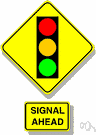 before - at or in the front; "I see the lights of a town ahead"; "the road ahead is foggy"; "staring straight ahead"; "we couldn't see over the heads of the people in front"; "with the cross of Jesus marching on before" before - at or in the front; "I see the lights of a town ahead"; "the road ahead is foggy"; "staring straight ahead"; "we couldn't see over the heads of the people in front"; "with the cross of Jesus marching on before" |
before
earlier than after, following, succeeding
previously after, later, afterwards, subsequently, thereafter
before
adverbbefore
[bɪˈfɔːʳ]before Christ → antes de Cristo
the week before last → hace dos semanas
before long (in future) → antes de poco; (in past) → poco después
before going, would you → antes de marcharte, quieres ...
income before tax → renta f bruta or antes de impuestos
profits before tax → beneficios mpl preimpositivos
they were married before a judge → se casaron en presencia de un juez
the problem before us is → el problema que se nos plantea es ...
the task before us → la tarea que tenemos por delante
we still have two hours before us → tenemos todavía dos horas por delante
a new life lay before him → una vida nueva se abría ante él
a moment before → un momento antes
the day before → el día anterior
before, it used to be different → antes, todo era distinto
on this occasion and the one before → en esta ocasión y la anterior
before and behind → por delante y por detrás
that chapter and the one before → ese capítulo y el anterior
Time
Adverb
Preposition
Conjunction
before
[bɪˈfɔːr]The weeks stretched out before him → Les semaines s'étendaient devant lui.
to lie before sb [task, duty] → attendre qn; [choice] → se présenter à qn; [scene] → s'étendre devant qn
I'll phone before I leave → J'appellerai avant de partir.
before she goes → avant qu'elle parte, avant qu'elle ne parte
before doing sth → avant de faire qch
Before opening the packet, read the instructions → Avant d'ouvrir le paquet, lisez le mode d'emploi.
before going → avant de partir
a week before → une semaine auparavant
the week before → la semaine précédente, la semaine d'avant
the day before → la veille
the night before → la veille au soir
before
before
[bɪˈfɔːʳ]before 7 o'clock → prima delle 7
the day before last or yesterday → due giorni fa, l'altro ieri, ieri l'altro
before Christ → avanti Cristo
before long → fra poco, fra non molto
a new life lay before him → una nuova vita si apriva davanti a lui
to appear before a judge → comparire davanti or dinanzi a un giudice
the question before us → la questione di cui ci dobbiamo occupare
before my very eyes → proprio sotto i miei occhi
ladies before gentlemen → prima le signore, la precedenza alle signore
to put friendship before money → anteporre l'amicizia all'interesse
the day before → il giorno prima or precedente
I have read it before → l'ho già letto
I've never seen it before → è la prima volta che lo vedo
the week before → la settimana prima
I knew long before that ... → sapevo da molto tempo che...
before doing it you ..., before you do it, you ... → prima di farlo, tu..., prima che tu lo faccia, tu...
he will die before he betrays his friends → morirebbe piuttosto che tradire gli amici