un·gu·late
(ŭng′gyə-lĭt, -lāt′)n.
A hoofed mammal, such as a horse, pig, deer, buffalo, or antelope, belonging to the former order Ungulata, now divided into several orders including Artiodactyla and Perissodactyla.
[Latin ungulātus, from ungula, hoof, diminutive of unguis, nail; see unguis.]
un′gu·late adj.
American Heritage® Dictionary of the English Language, Fifth Edition. Copyright © 2016 by Houghton Mifflin Harcourt Publishing Company. Published by Houghton Mifflin Harcourt Publishing Company. All rights reserved.
ungulate
(ˈʌŋɡjʊlɪt; -ˌleɪt)n
1. (Zoology) any of a large group of mammals all of which have hooves: divided into odd-toed ungulates (perissodactyls) and even-toed ungulates (artiodactyls). See perissodactyl, artiodactyl
2. (Animals) any of a large group of mammals all of which have hooves: divided into odd-toed ungulates (perissodactyls) and even-toed ungulates (artiodactyls). See perissodactyl, artiodactyl
[C19: from Late Latin ungulātus having hooves, from ungula]
Collins English Dictionary – Complete and Unabridged, 12th Edition 2014 © HarperCollins Publishers 1991, 1994, 1998, 2000, 2003, 2006, 2007, 2009, 2011, 2014
un•gu•late
(ˈʌŋ gyə lɪt, -ˌleɪt)adj.
1. having hoofs.
2. belonging or pertaining to the former order Ungulata, comprising all hoofed mammals, now divided into the odd-toed perissodactyls and the even-toed artiodactyls.
3. hooflike.
n. 4. a hoofed mammal.
[1795–1805; < Late Latin ungulātus hoofed = Latin ungul(a) hoof (ung(uis) (see unguis) + -ula -ule) + -ātus -ate1]
Random House Kernerman Webster's College Dictionary, © 2010 K Dictionaries Ltd. Copyright 2005, 1997, 1991 by Random House, Inc. All rights reserved.
un·gu·late
(ŭng′gyə-lĭt) A hoofed mammal. There are two kinds of ungulates: those having an even number of toes (artiodactyls) and those having an odd number of toes (perissodactyls).
The American Heritage® Student Science Dictionary, Second Edition. Copyright © 2014 by Houghton Mifflin Harcourt Publishing Company. Published by Houghton Mifflin Harcourt Publishing Company. All rights reserved.
ungulate
a mammal having hoofs, as the cow, horse, etc. — ungulate, adj.
See also: Animals-Ologies & -Isms. Copyright 2008 The Gale Group, Inc. All rights reserved.
ThesaurusAntonymsRelated WordsSynonymsLegend:
| Noun | 1. | 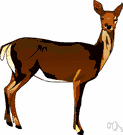 ungulate - any of a number of mammals with hooves that are superficially similar but not necessarily closely related taxonomically ungulate - any of a number of mammals with hooves that are superficially similar but not necessarily closely related taxonomicallyeutherian, eutherian mammal, placental, placental mammal - mammals having a placenta; all mammals except monotremes and marsupials hoof - the foot of an ungulate mammal dinocerate - an extinct ungulate odd-toed ungulate, perissodactyl, perissodactyl mammal - placental mammals having hooves with an odd number of toes on each foot artiodactyl, artiodactyl mammal, even-toed ungulate - placental mammal having hooves with an even number of functional toes on each foot hock-joint, hock - tarsal joint of the hind leg of hoofed mammals; corresponds to the human ankle |
| Adj. | 1. | 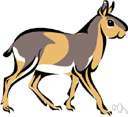 ungulate - having or resembling hoofs; "horses and other hoofed animals" ungulate - having or resembling hoofs; "horses and other hoofed animals"unguiculate, unguiculated - having or resembling claws or nails; "unguiculate animals"; "an unguiculate flower petal" |
Based on WordNet 3.0, Farlex clipart collection. © 2003-2012 Princeton University, Farlex Inc.
Translations
HuftierUnpaarhufer
kavioeläin
parkljar
Collins Spanish Dictionary - Complete and Unabridged 8th Edition 2005 © William Collins Sons & Co. Ltd. 1971, 1988 © HarperCollins Publishers 1992, 1993, 1996, 1997, 2000, 2003, 2005
Collins German Dictionary – Complete and Unabridged 7th Edition 2005. © William Collins Sons & Co. Ltd. 1980 © HarperCollins Publishers 1991, 1997, 1999, 2004, 2005, 2007