wake 1
(wāk)v. woke (wōk) or waked (wākt), waked or wok·en (wō′kən), wak·ing, wakes
v.intr.
1.
a. To cease to sleep; become awake: overslept and woke late.
b. To stay awake: Bears wake for spring, summer, and fall and hibernate for the winter.
c. To be brought into a state of awareness or alertness: suddenly woke to the danger we were in.
2. To hold or attend the wake of someone who has died.
v.tr.
1. To cause to come out of sleep; awaken.
2. To stir, as from a dormant or inactive condition; rouse: wake old animosities.
3. To make aware; alert or enlighten: The report woke me to the facts of the matter.
n.
1. A gathering of people in the presence of the body of a deceased person in order to honor the person and console one another.
2. wakes(used with a sing. or pl. verb) Chiefly British
a. A parish festival held annually, often in honor of a patron saint.
b. An annual vacation.
[Middle English wakien, waken, from Old English wacan, to wake up and wacian, to be awake, keep watch; see weg- in Indo-European roots.]
wak′er n.
Usage Note: The pairs wake, waken and awake, awaken have formed a bewildering array since the Middle English period. All four words have similar meanings, though there are some differences in use. Only wake is used in the sense "to be awake," as in expressions like waking (not wakening) and sleeping, every waking hour. Wake is also more common than waken when used together with up, and awake and awaken never occur in this context: She woke up (rarely wakened up; never awakened up or awoke up). Some writers have suggested that waken should be used only transitively (as in The alarm wakened him) and awaken only intransitively (as in He awakened at dawn), but there is ample literary precedent for usages such as He wakened early and They did not awaken her. In figurative senses awake and awaken are more prevalent: With the governor's defeat, the party awoke to the strength of the opposition. The scent of the gardenias awakened my memory of his unexpected appearance that afternoon years ago. · Regional American dialects vary in the way that certain verbs form their principal parts. Northern dialects seem to favor forms that change the internal vowel in the verb—hence dove for the past tense of dive, and woke for wake: They woke up with a start. Southern dialects, on the other hand, tend to prefer forms that add an -ed to form the past tense and the past participle of these same verbs: The children dived into the swimming hole. The baby waked up early.
wake 2
(wāk)n.
Idiom: 1. The visible track of turbulence left by something moving through water: the wake of a ship.
2. A track, course, or condition left behind something that has passed: The war left destruction and famine in its wake.
in the wake of
1. Following directly on.
2. In the aftermath of; as a consequence of.
[Possibly from Middle Low German, hole in the ice, of Scandinavian origin; akin to Old Norse vök.]
American Heritage® Dictionary of the English Language, Fifth Edition. Copyright © 2016 by Houghton Mifflin Harcourt Publishing Company. Published by Houghton Mifflin Harcourt Publishing Company. All rights reserved.
wake
(weɪk)vb, wakes, waking, woke or woken
1. (Physiology) (often foll by up) to rouse or become roused from sleep
2. (Physiology) (often foll by up) to rouse or become roused from inactivity
3. (intr; often foll by to or up to) to become conscious or aware: at last he woke to the situation.
4. (Physiology) (intr) to be or remain awake
5. (tr) to arouse (feelings etc)
6. (Ecclesiastical Terms) dialect to hold a wake over (a corpse)
7. archaic or dialect to keep watch over
8. wake up and smell the coffee informal to face up to reality, especially in an unpleasant situation
n
9. (Ecclesiastical Terms) a watch or vigil held over the body of a dead person during the night before burial
10. (Ecclesiastical Terms) (in Ireland) festivities held after a funeral
11. (Protestantism) the patronal or dedication festival of English parish churches
12. a solemn or ceremonial vigil
13. (Industrial Relations & HR Terms) (usually plural) an annual holiday in any of various towns in northern England, when the local factory or factories close, usually for a week or two weeks
14. rare the state of being awake
[Old English wacian; related to Old Frisian wakia, Old High German wahtēn]
ˈwaker n
Usage: Where there is an object and the sense is the literal one wake (up) and waken are the commonest forms: I wakened him; I woke him (up). Both verbs are also commonly used without an object: I woke up. Awake and awaken are preferred to other forms of wake where the sense is a figurative one: he awoke to the danger
wake
(weɪk)n
1. (Nautical Terms) the waves or track left by a vessel or other object moving through water
2. the track or path left by anything that has passed: wrecked houses in the wake of the hurricane.
[C16: of Scandinavian origin; compare Old Norse vaka, vök hole cut in ice, Swedish vak, Danish vaage; perhaps related to Old Norse vökr, Middle Dutch wak wet]
Collins English Dictionary – Complete and Unabridged, 12th Edition 2014 © HarperCollins Publishers 1991, 1994, 1998, 2000, 2003, 2006, 2007, 2009, 2011, 2014
wake1
(weɪk)v. waked woke, waked wok•en, wak•ing, v.i.
1. to become roused from sleep; awake; awaken; waken (often fol. by up).
2. to become roused from a tranquil or inactive state; awake: to wake from one's daydreams.
3. to become cognizant or aware of something; awaken: to wake to the situation.
4. to be or continue to be awake.
5. to hold a wake over a corpse.
6. to keep watch or vigil.
v.t. 7. to rouse from sleep; awaken (often fol. by up).
8. to rouse from lethargy, apathy, etc. (often fol. by up): It woke us up to the need for conservation.
9. to hold a wake for.
10. to keep watch or vigil over.
n. 11. a watch kept, esp. for some solemn purpose.
12. a watch or vigil by the body of a dead person before burial.
13. a local annual festival in England, formerly to honor the patron saint.
14. the state of being awake: between sleep and wake.
[before 900; Middle English: to be awake, Old English wacian, c. Old Frisian wakia, Old Saxon wakōn, Old Norse vaka, Gothic wakan; compare awake]
wake2
(weɪk)n.
1. the track of waves left by a ship or boat moving through the water.
2. the path or course of anything that has passed or preceded: The tornado left ruin in its wake.
[1540–50; < Middle Low German, Dutch wake, or Old Norse vǫk hole in the ice]
Random House Kernerman Webster's College Dictionary, © 2010 K Dictionaries Ltd. Copyright 2005, 1997, 1991 by Random House, Inc. All rights reserved.
wake
Past participle: woken
Gerund: waking
| Imperative |
|---|
| wake |
| wake |
Collins English Verb Tables © HarperCollins Publishers 2011
ThesaurusAntonymsRelated WordsSynonymsLegend:
| Noun | 1. |  wake - the consequences of an event (especially a catastrophic event); "the aftermath of war"; "in the wake of the accident no one knew how many had been injured" wake - the consequences of an event (especially a catastrophic event); "the aftermath of war"; "in the wake of the accident no one knew how many had been injured" |
| 2. |  Wake - an island in the western Pacific between Guam and Hawaii Wake - an island in the western Pacific between Guam and HawaiiBattle of Wake, Battle of Wake Island - in December 1941 the island was captured by the Japanese after a gallant last-ditch stand by a few hundred United States marines Pacific, Pacific Ocean - the largest ocean in the world | |
| 3. | 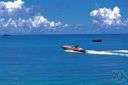 wake - the wave that spreads behind a boat as it moves forward; "the motorboat's wake capsized the canoe" wake - the wave that spreads behind a boat as it moves forward; "the motorboat's wake capsized the canoe"moving ridge, wave - one of a series of ridges that moves across the surface of a liquid (especially across a large body of water) | |
| 4. |  wake - a vigil held over a corpse the night before burial; "there's no weeping at an Irish wake" wake - a vigil held over a corpse the night before burial; "there's no weeping at an Irish wake" | |
| Verb | 1. |  wake - be awake, be alert, be there wake - be awake, be alert, be there |
| 2. |  wake - stop sleeping; "She woke up to the sound of the alarm clock" wake - stop sleeping; "She woke up to the sound of the alarm clock"change state, turn - undergo a transformation or a change of position or action; "We turned from Socialism to Capitalism"; "The people turned against the President when he stole the election" | |
| 3. |  wake - arouse or excite feelings and passions; "The ostentatious way of living of the rich ignites the hatred of the poor"; "The refugees' fate stirred up compassion around the world"; "Wake old feelings of hatred" wake - arouse or excite feelings and passions; "The ostentatious way of living of the rich ignites the hatred of the poor"; "The refugees' fate stirred up compassion around the world"; "Wake old feelings of hatred"arouse, elicit, evoke, provoke, enkindle, kindle, fire, raise - call forth (emotions, feelings, and responses); "arouse pity"; "raise a smile"; "evoke sympathy" ferment - work up into agitation or excitement; "Islam is fermenting Africa" | |
| 4. |  wake - make aware of; "His words woke us to terrible facts of the situation" wake - make aware of; "His words woke us to terrible facts of the situation" | |
| 5. |  wake - cause to become awake or conscious; "He was roused by the drunken men in the street"; "Please wake me at 6 AM." wake - cause to become awake or conscious; "He was roused by the drunken men in the street"; "Please wake me at 6 AM."reawaken - awaken once again bring to, bring back, bring round, bring around - return to consciousness; "These pictures bring back sad memories" call - rouse somebody from sleep with a call; "I was called at 5 A.M. this morning" |
Based on WordNet 3.0, Farlex clipart collection. © 2003-2012 Princeton University, Farlex Inc.
wake
1verb
noun
1. vigil, watch, funeral, deathwatch A funeral wake was in progress.
wake someone up activate, stimulate, enliven, galvanize, fire, excite, provoke, motivate, arouse, awaken, animate, rouse, mobilize, energize, kindle, switch someone on, stir someone up He needs a shock to wake him up a bit.
wake up to something realize, understand, recognize, appreciate, grasp, conceive, comprehend, become aware of, twig (Brit. informal), get the message, apprehend, catch on to (informal), become conscious of, be cognizant of She woke up to the fact that she could not compete with her sister.
wake
2noun slipstream, wash, trail, backwash, train, track, waves, path Dolphins sometimes play in the wake of the boats.
in the wake of in the aftermath of, following, because of, as a result of, on account of, as a consequence of The move comes in the wake of new measures brought in by the government.
Collins Thesaurus of the English Language – Complete and Unabridged 2nd Edition. 2002 © HarperCollins Publishers 1995, 2002
wake 1
verbnounA watch over the body of a dead person before burial:
wake 2
nounThe American Heritage® Roget's Thesaurus. Copyright © 2013, 2014 by Houghton Mifflin Harcourt Publishing Company. Published by Houghton Mifflin Harcourt Publishing Company. All rights reserved.
Translations
أَثَر المَخْر خَلْف السَّفينَهيَسْتَيْقِظ
събуждам
kølvandvækkevågne
herätäherättäävanavesi
kjölfarvakna, vekja
ķīļūdensmodinātmostiespamodinātpamosties
kilwatersmuga kondensacyjna
kýlová brázda
zbuditizbuditi se
väckavakna
dümen suyuuyan mak
wake
1 [weɪk] N1. (Naut) → estela f
2. (fig) the tornado brought/left a trail of destruction in its wake → el tornado dejó una estela de destrucción a su paso
in the wake of the storm/riots → tras la tormenta/los disturbios
to come or follow in the wake of sth → producirse a raíz de algo
in the wake of the storm/riots → tras la tormenta/los disturbios
to come or follow in the wake of sth → producirse a raíz de algo
wake
2 [weɪk] N (over corpse) → velatorio m, vela f, velorio m (esp LAm)wake
3 [weɪk] (woke, waked (vb: pt) (woken, waked (pp)))A. VI (also wake up) → despertar, despertarse
to wake from a dream/deep sleep/coma → despertar(se) de un sueño/sueño profundo/coma
on waking → al despertar
to wake from a dream/deep sleep/coma → despertar(se) de un sueño/sueño profundo/coma
on waking → al despertar
B. VT (also wake up) → despertar
they were making enough noise to wake the dead → hacían un ruido que despertaría a los muertos
they were making enough noise to wake the dead → hacían un ruido que despertaría a los muertos
wake up
A. VI + ADV
1. (lit) → despertar, despertarse
wake up! → ¡despierta!, ¡depiértate!
to wake up from a nightmare → despertar(se) de una pesadilla
to wake up with a hangover/a headache → despertar(se) con resaca/dolor de cabeza
he woke up (to find himself) in prison → amaneció en la cárcel
she woke up to find them gone → cuando (se) despertó se encontró con que se habían ido
wake up and smell the coffee! (esp US) → ¡abre los ojos!, ¡pon los pies en la tierra!
wake up! → ¡despierta!, ¡depiértate!
to wake up from a nightmare → despertar(se) de una pesadilla
to wake up with a hangover/a headache → despertar(se) con resaca/dolor de cabeza
he woke up (to find himself) in prison → amaneció en la cárcel
she woke up to find them gone → cuando (se) despertó se encontró con que se habían ido
wake up and smell the coffee! (esp US) → ¡abre los ojos!, ¡pon los pies en la tierra!
2. (fig) → despertar(se), despabilar(se)
companies had better wake up → a las empresas les convendría despertar(se)
wake up, Ian! we've already discussed point 12 → ¡despierta or despabila Ian! ya hemos discutido el punto 12, ¡despiértate or despabílate Ian! ya hemos discutido el punto
to wake up to the truth → darse cuenta de la verdad
to wake up to reality → darse cuenta de la realidad, despertar a la realidad
companies had better wake up → a las empresas les convendría despertar(se)
wake up, Ian! we've already discussed point 12 → ¡despierta or despabila Ian! ya hemos discutido el punto 12, ¡despiértate or despabílate Ian! ya hemos discutido el punto
to wake up to the truth → darse cuenta de la verdad
to wake up to reality → darse cuenta de la realidad, despertar a la realidad
Collins Spanish Dictionary - Complete and Unabridged 8th Edition 2005 © William Collins Sons & Co. Ltd. 1971, 1988 © HarperCollins Publishers 1992, 1993, 1996, 1997, 2000, 2003, 2005
wake
[ˈweɪk] vb [woke, waked] (pt) [woken, waked] (pp)
vi
n
vt sep
to wake sb up → réveiller qn
Please would you wake me up at seven o'clock? → Pourriez-vous me réveiller à sept heures?
to wake sb up → réveiller qn
Please would you wake me up at seven o'clock? → Pourriez-vous me réveiller à sept heures?
wake up to
vt fus (= realize) → se rendre compte de qchCollins English/French Electronic Resource. © HarperCollins Publishers 2005
wake
1n (Naut) → Kielwasser nt; in the wake of (fig) → im Gefolge (+gen); to follow in somebody’s wake → in jds Kielwasser segeln; X follows in the wake of Y → Y bringt X mit sich; X brings Y in its wake → X bringt Y mit sich; X leaves Y in its wake → X hinterlässt Y; with ten children in her wake (inf) → mit zehn Kindern im Schlepptau (inf)
wake
2n (esp Ir: over corpse) → Totenwache f
wake
3 pret <woke>, ptp <woken or waked>vi → aufwachen, erwachen (geh); he woke to find himself in prison → als er aufwachte or erwachte, fand er sich im Gefängnis wieder; he woke to the sound of birds singing → als er aufwachte, sangen die Vögel; he woke one day to find himself a rich man → als er eines Tages erwachte or aufwachte, war er ein reicher Mann; they woke to their danger too late (fig) → sie haben die Gefahr zu spät erkannt
Collins German Dictionary – Complete and Unabridged 7th Edition 2005. © William Collins Sons & Co. Ltd. 1980 © HarperCollins Publishers 1991, 1997, 1999, 2004, 2005, 2007
wake
1 [weɪk] n (of ship) → sciain the wake of → sulla scia di
to follow in sb's wake (fig) → camminare dietro a qn
it left a trail of destruction in its wake → ha lasciato dietro di sé una scia di distruzione
wake
2 [weɪk] n (over corpse) → veglia funebrewake
3 [weɪk] (woke or waked (pt) (woken or waked (pp)))1. vi (also wake up) → svegliarsi, destarsi
wake up! (also) (fig) → svegliati!
there's enough noise to wake the dead! → c'è un baccano del diavolo!
to wake up to sth (fig) → rendersi conto di qc
wake up! (also) (fig) → svegliati!
there's enough noise to wake the dead! → c'è un baccano del diavolo!
to wake up to sth (fig) → rendersi conto di qc
Collins Italian Dictionary 1st Edition © HarperCollins Publishers 1995
wake1
(weik) – past tense woke (wouk) (rare) waked: past participle woken (ˈwoukən) , (rare) waked – verb to bring or come back to consciousness after being asleep. He woke to find that it was raining; Go and wake the others, will you?
ˈwakeful adjective1. not asleep; not able to sleep. a wakeful child.
2. (of a night) in which one gets little sleep. We spent a wakeful night worrying about her.
ˈwakefully adverbˈwakefulness noun
ˈwaken verb
to wake. What time are you going to waken him?; I wakened early.
wake up1. to wake. Wake up! You're late; The baby woke up in the middle of the night.
2. to become aware of. It is time you woke up to the fact that you are not working hard enough.
wake2
(weik) noun a strip of smooth-looking or foamy water left behind a ship.
in the wake of immediately behind or after. Our tiny boat was caught in the wake of the huge ship.
Kernerman English Multilingual Dictionary © 2006-2013 K Dictionaries Ltd.
wake
v. despertar;
to ___ up → despertar; despertarse.
English-Spanish Medical Dictionary © Farlex 2012
Collins Multilingual Translator © HarperCollins Publishers 2009
wake
vt, vi (pret woke; pp woke o waked) (también to — up) despertar(se)English-Spanish/Spanish-English Medical Dictionary Copyright © 2006 by The McGraw-Hill Companies, Inc. All rights reserved.