object
object
ob·ject
(ŏb′jĭkt, -jĕkt′)These verbs mean to express opposition to something, usually by presenting arguments against it. Object implies the expression of disapproval or distaste: "I took some criticism from Democrats who objected to the tax cut or to the fact that we were making the agreement at all" (Bill Clinton).
Protest suggests strong opposition, usually forthrightly expressed: The manager protested the umpire's decision. To demur is to raise an objection that may delay decision or action: We proposed a revote, but the president demurred. Remonstrate implies the presentation of objections, complaints, or reproof: "The people of Connecticut ... remonstrated against the bill" (George Bancroft).
To expostulate is to express objection in the form of earnest reasoning: The teacher expostulated with them on the foolhardiness of their behavior. See Also Synonyms at intention.
object
(ˈɒbdʒɪkt)object
(əbˈdʒɛkt)ob•ject
(n. ˈɒb dʒɪkt, -dʒɛkt; v. əbˈdʒɛkt)n.
object
Object can be a noun or a verb. When it is a noun, it is pronounced /'ɒbdʒekt/. When it is a verb, it is pronounced /əb'dʒekt/.
You can refer to anything that has a fixed shape and that is not alive as an object.
A person's object is their aim or purpose.
If you object to something, you do not approve of it, or you say that you do not approve of it.
If you object to doing something, you say that you don't think you should do it.
You use an -ing form, not an infinitive, after object to.
If it is clear what you are referring to, you can use object without 'to'.
If you want to say why someone does not approve of something or does not agree with something, you can use object with a that-clause. For example, you can say 'They wanted me to do some extra work, but I objected that I had too much to do already'. This is a fairly formal use.
object
Past participle: objected
Gerund: objecting
| Imperative |
|---|
| object |
| object |
object
| Noun | 1. | 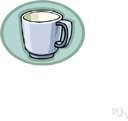 object - a tangible and visible entity; an entity that can cast a shadow; "it was full of rackets, balls and other objects" object - a tangible and visible entity; an entity that can cast a shadow; "it was full of rackets, balls and other objects"physical entity - an entity that has physical existence whole, unit - an assemblage of parts that is regarded as a single entity; "how big is that part compared to the whole?"; "the team is a unit" location - a point or extent in space good luck charm, charm - something believed to bring good luck curio, curiosity, oddment, peculiarity, rarity, oddity - something unusual -- perhaps worthy of collecting draw, lot - anything (straws or pebbles etc.) taken or chosen at random; "the luck of the draw"; "they drew lots for it" film - a thin coating or layer; "the table was covered with a film of dust" hoodoo - something believed to bring bad luck je ne sais quoi - something indescribable makeweight, filler - anything added to fill out a whole; "some of the items in the collection are mere makeweights" part, portion - something less than the whole of a human artifact; "the rear part of the house"; "glue the two parts together" prop, property - any movable articles or objects used on the set of a play or movie; "before every scene he ran down his checklist of props" snake - something long, thin, and flexible that resembles a snake stuff - miscellaneous unspecified objects; "the trunk was full of stuff" paring - (usually plural) a part of a fruit or vegetable that is pared or cut off; especially the skin or peel; "she could peel an apple with a single long paring" catch - anything that is caught (especially if it is worth catching); "he shared his catch with the others" commemorative - an object (such as a coin or postage stamp) made to mark an event or honor a person discard - anything that is cast aside or discarded finding - something that is found; "the findings in the gastrointestinal tract indicate that he died several hours after dinner"; "an area rich in archaeological findings" floater - an object that floats or is capable of floating fomite, vehicle - any inanimate object (as a towel or money or clothing or dishes or books or toys etc.) that can transmit infectious agents from one person to another geological formation, formation - (geology) the geological features of the earth growth - something grown or growing; "a growth of hair" hail - many objects thrown forcefully through the air; "a hail of pebbles"; "a hail of bullets" head - a rounded compact mass; "the head of a comet" ice - the frozen part of a body of water dry land, ground, solid ground, terra firma, earth, land - the solid part of the earth's surface; "the plane turned away from the sea and moved back over land"; "the earth shook for several minutes"; "he dropped the logs on the ground" land, soil, ground - material in the top layer of the surface of the earth in which plants can grow (especially with reference to its quality or use); "the land had never been plowed"; "good agricultural soil" moon - any object resembling a moon; "he made a moon lamp that he used as a night light"; "the clock had a moon that showed various phases" neighbor, neighbour - a nearby object of the same kind; "Fort Worth is a neighbor of Dallas"; "what is the closest neighbor to the Earth?" remains - any object that is left unused or still extant; "I threw out the remains of my dinner" ribbon, thread - any long object resembling a thin line; "a mere ribbon of land"; "the lighted ribbon of traffic"; "from the air the road was a grey thread"; "a thread of smoke climbed upward" shiner - something that shines (with emitted or reflected light) vagabond - anything that resembles a vagabond in having no fixed place; "pirate ships were vagabonds of the sea" wall - anything that suggests a wall in structure or function or effect; "a wall of water"; "a wall of smoke"; "a wall of prejudice"; "negotiations ran into a brick wall" web - an intricate network suggesting something that was formed by weaving or interweaving; "the trees cast a delicate web of shadows over the lawn" |
| 2. |  object - the goal intended to be attained (and which is believed to be attainable); "the sole object of her trip was to see her children" object - the goal intended to be attained (and which is believed to be attainable); "the sole object of her trip was to see her children"goal, end - the state of affairs that a plan is intended to achieve and that (when achieved) terminates behavior intended to achieve it; "the ends justify the means" grail - the object of any prolonged endeavor business - an immediate objective; "gossip was the main business of the evening" point - the object of an activity; "what is the point of discussing it?" thing - a special objective; "the thing is to stay in bounds" | |
| 3. | object - (grammar) a constituent that is acted upon; "the object of the verb" grammar - the branch of linguistics that deals with syntax and morphology (and sometimes also deals with semantics) object of a preposition, prepositional object - the object governed by a preposition direct object, object of the verb - the object that receives the direct action of the verb indirect object - the object that is the recipient or beneficiary of the action of the verb retained object - an object in a passive construction grammatical constituent, constituent - (grammar) a word or phrase or clause forming part of a larger grammatical construction | |
| 4. | object - the focus of cognitions or feelings; "objects of thought"; "the object of my affection" cognitive content, mental object, content - the sum or range of what has been perceived, discovered, or learned antipathy - the object of a feeling of intense aversion; something to be avoided; "cats were his greatest antipathy" bugbear, hobgoblin - an object of dread or apprehension; "Germany was always a bugbear for France"; "A foolish consistency is the hobgoblin of little minds"--Ralph Waldo Emerson execration - the object of cursing or detestation; that which is execrated center of attention, centre of attention, center, centre - the object upon which interest and attention focuses; "his stories made him the center of the party" hallucination - an object perceived during a hallucinatory episode; "he refused to believe that the angel was a hallucination" infatuation - an object of extravagant short-lived passion | |
| 5. | object - (computing) a discrete item that provides a description of virtually anything known to a computer; "in object-oriented programming, objects include data and define its status, its methods of operation and how it interacts with other objects" computer science, computing - the branch of engineering science that studies (with the aid of computers) computable processes and structures | |
| Verb | 1. | object - express or raise an objection or protest or criticism or express dissent; "She never objected to the amount of work her boss charged her with"; "When asked to drive the truck, she objected that she did not have a driver's license" disapprove, reject - deem wrong or inappropriate; "I disapprove of her child rearing methods" take exception, challenge - raise a formal objection in a court of law mind - be offended or bothered by; take offense with, be bothered by; "I don't mind your behavior" remonstrate - argue in protest or opposition make a stink, raise a stink, raise hell - take strong and forceful action, as to object or express discontent; "She raised hell when she found out that she wold not be hired again" |
| 2. | object - be averse to or express disapproval of; "My wife objects to modern furniture" be - have the quality of being; (copula, used with an adjective or a predicate noun); "John is rich"; "This is not a good answer" |
object
1object
2protest against accept, welcome, approve, like, comply with, consent to, take on board
disagree agree, concur, assent, acquiesce
object
nounobject
1 [ˈɒbdʒɪkt]I was forbidden to lift heavy objects → tenía prohibido levantar objetos pesados
see also sex C
the economy was the object of heated discussion → la economía fue el objeto de una acalorada discusión
the object of her hatred/love → el objeto de su odio/su amor
she was an object of pity to all → era objeto de conmiseración para todos
he became an object of ridicule → quedó en ridículo
their main object was to make money → su principal objetivo era hacer dinero
what's the object of doing that?; what object is there in doing that? → ¿de qué sirve hacer eso?
the object of the exercise is to raise money for charity → lo que se persigue con esto es recaudar dinero con fines benéficos
that's the whole object of the exercise → de eso precisamente se trata
with this object in mind or in view → con este objetivo or propósito en mente
I want the best, money is no object → quiero lo mejor, no importa cuánto cueste
I want to have a great holiday, money is no object → quiero tirarme unas vacaciones estupendas, el dinero no es problema
money is no object to him → el dinero no es problema or obstáculo para él
object language N (Comput) → lengua f objeto
object lesson N (fig) it was an object lesson in how not to drive a car → fue un perfecto ejemplo de cómo no conducir un coche
object pronoun N (Gram) → pronombre m que funciona como objeto
direct/indirect object pronoun → pronombre m que funciona como objeto directo/indirecto
object
2 [əbˈdʒekt]"you can't do that," he objected → -no puedes hacer eso -objetó
he objected that there wasn't enough time → puso la objección de que or objetó que no tenían suficiente tiempo
I won't go if you object → no iré si te opones
if you don't object → si no tiene inconveniente
to object to sth: a lot of people will object to the book → mucha gente se opondrá al libro
I wouldn't object to a bite to eat → no diría que no a algo que comer
to object to sb: she objects to my friends → no le gustan mis amigos
I would object to Paul but not to Robert as chairman → me opondría a que Paul fuera presidente, pero no a que lo fuera Robert
to object to sb doing sth: he objects to her drinking → no le gusta que beba
do you object to my smoking? → ¿le molesta que fume?
do you object to my going? → ¿te importa que vaya?
he didn't object when → no su opuso or no puso objeciones cuando ...
he objected in the strongest possible terms → se opuso de la manera más enérgica
I object! (frm) → ¡protesto!
we objected strongly but were outvoted → nos opusimos enérgicamente pero perdimos la votación
I object to that remark! → ¡ese comentario no lo tolero!
object
[ˈɒbdʒɪkt]the object of her visit → l'objet de sa visite
what's the object of doing that? → quel est l'intérêt de faire cela?
I'd buy them if money were no object → Je les achèterais si l'argent n'était pas un obstacle.
distance is no object → la distance n'est pas un obstacle
an object of ridicule → un objet de ridicule
to be the object of sb's affection → être l'objet de l'affection de qn
young Eileen, the object of his desires → la jeune Eileen, l'objet de ses désirs
I object! → je proteste!
to object that ... → objecter que ...
he objected that → il a objecté que ...
to object to doing sth → ne pas être d'accord pour faire qch
I object to spending £40 on champagne → Je ne suis pas d'accord pour dépenser 40 livres sur du champagne.
to object to sb doing sth → ne pas être d'accord pour que qn fasse qch
Some doctors object to nurses prescribing drugs → Certains médecins ne sont pas d'accord pour que les infirmiers prescrivent des médicaments.
Do you object to my smoking?
BUT Voyez-vous une objection à ce que je fume?.
object
:object
1object
2object
1 [ˈɒbdʒɪkt] nwith this object in view or in mind → in vista di questo scopo
with the object of doing → al fine di fare
what's the object of doing that? → a che serve farlo?
expense is no object → non si bada a spese
object
2 [əbˈdʒɛkt]if you don't object → se non hai obiezioni
to object to sb doing sth → disapprovare che qn faccia qc
she objects to my behaviour → lei disapprova il mio comportamento
do you object to my smoking? → la disturba se fumo?
I object! (frm) → mi oppongo!