pas·cal
(pă-skăl′, pä-skäl′)n.
1. Abbr. Pa A unit of pressure equal to one newton per square meter.
2. Pascal A programming language designed to support structured programming and used in teaching, applications, and systems programming.
[After Blaise Pascal.]
American Heritage® Dictionary of the English Language, Fifth Edition. Copyright © 2016 by Houghton Mifflin Harcourt Publishing Company. Published by Houghton Mifflin Harcourt Publishing Company. All rights reserved.
Pascal
(French paskal)n
(Biography) Blaise (blɛz). 1623–62, French philosopher, mathematician, and physicist. As a scientist, he made important contributions to hydraulics and the study of atmospheric pressure and, with Fermat, developed the theory of probability. His chief philosophical works are Lettres provinciales (1656–57), written in defence of Jansenism and against the Jesuits, and Pensées (1670), fragments of a Christian apologia
Pascal
(ˈpæsˌkæl; -kəl)n
(Computer Science) a high-level computer programming language developed as a teaching language: used for general-purpose programming
pascal
(ˈpæskəl)n
(Units) physics the derived SI unit of pressure; the pressure exerted on an area of 1 square metre by a force of 1 newton; equivalent to 10 dynes per square centimetre or 1.45 × 10⁻⁴ pound per square inch. Symbol: Pa
[C20: named after Blaise Pascal]
Collins English Dictionary – Complete and Unabridged, 12th Edition 2014 © HarperCollins Publishers 1991, 1994, 1998, 2000, 2003, 2006, 2007, 2009, 2011, 2014
pas•cal
(pæˈskæl, pɑˈskɑl)n.
the SI unit of pressure or stress, equal to one newton per square meter. Abbr.: Pa
[1955–60; after Blaise Pascal]
Pas•cal
(pæˈskæl)n.
1. Blaise, 1623–62, French philosopher and mathematician.
2. Also, PASCAL a high-level computer language, a descendant of ALGOL, designed to facilitate structured programming.
Random House Kernerman Webster's College Dictionary, © 2010 K Dictionaries Ltd. Copyright 2005, 1997, 1991 by Random House, Inc. All rights reserved.
pas·cal
(pă-skăl′, pä-skäl′) A unit used to measure pressure. One pascal is equal to one newton per square meter.
The American Heritage® Student Science Dictionary, Second Edition. Copyright © 2014 by Houghton Mifflin Harcourt Publishing Company. Published by Houghton Mifflin Harcourt Publishing Company. All rights reserved.
Pascal
1. The unit of pressure produced when one newton acts on about 1 sq m.
2. (Pa) A unit of pressure equal to the force of one newton acting over an area of one square meter.
3. A high-level, general-purpose programming language.
Dictionary of Unfamiliar Words by Diagram Group Copyright © 2008 by Diagram Visual Information Limited
ThesaurusAntonymsRelated WordsSynonymsLegend:
| Noun | 1. | pascal - a unit of pressure equal to one newton per square meter pressure unit - a unit measuring force per unit area |
| 2. | 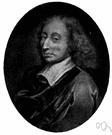 Pascal - French mathematician and philosopher and Jansenist; invented an adding machine; contributed (with Fermat) to the theory of probability (1623-1662) Pascal - French mathematician and philosopher and Jansenist; invented an adding machine; contributed (with Fermat) to the theory of probability (1623-1662) | |
| 3. | Pascal - a programing language designed to teach programming through a top-down modular approach programing language, programming language - (computer science) a language designed for programming computers |
Based on WordNet 3.0, Farlex clipart collection. © 2003-2012 Princeton University, Farlex Inc.